
Postcard from Canidelo
... or 'intermezzo' where my local neighbourhood helps me to find space - along with the discovery of its rich associations with Portugal's 'skeleton queen'!

This postcard arrived earlier this week with paid subscribers - with a big dollop of gratitude for your ongoing support! - and is now here for all to peruse at their leisure!
It has undergone a few quite substantial edits to explore a little more of the history I unearthed (via Wikipedia, mainly!) with some wonderful literary connections relating to Iñes de Castro so if that’s your bag, I hope you enjoy! And do feel free to share this with others who similarly enjoy such rabbit-holes😊
Intermezzo.
The pause in the middle.
A diminuendo, a lightening.
A moment to catch one’s breath, reflect, before embarking upon or rising up to the next wave or next act.
This moment is intentional, purposeful.
And in music, it has been said, it is often the most beautiful part.
I am finally learning to say ‘no’ to social invitations, without fearing I’m causing offence. Instead of making up some excuse, or complaining I have a headache (I often do), I ‘fess up and tell friends the truth: my introvert soul simply implodes after too many hours of back-to-back conversation.
I need to retire, physically, and replenish. Reset.
I remember reading ‘Quiet’ by Susan Cain not long after it was first published, and I felt as though for the first time someone had given me permission to be the way I am: perfectly happy to hang out with friends, and even to ‘conduct’ eight hour teaching days - because being in the classroom really does feel like being a conductor at times - but rarely could I do both side-by-side.
I needed a decompression chamber. And I find that, even without the classroom now, I still do.
So this week, after a very busy few weeks, both here and back in England, I determined that this week’s diary would contain only the routine stuff: my part-time tutoring, our Portuguese classes, my Tai Chi class, and just ONE morning coffee with friends [Edit: this latter was a highlight - thank you, J and V! - with coffee and cake extended over a few hours before a walk through mizzle to show off our neighbourhood!]
The rest of the week has been for mooching.
Each morning, I’ve felt a bit like a sailor, holding up a finger to the weather to see which way the wind blows, and using that to determine my course for the day.
And that’s why this week’s postcard is from here, Canidelo, the neighbourhood we now call home, and which I love walking around, even though it’s not especially picturesque to most of those travelling through from the city to the beaches, the area’s main attraction.
Obviously, it has some excellent moments, not least the view that first greets us when we leave our building of the estuary. When the tide’s out, I feel my lungs physically open with the expanse of it all. And the boardwalks that stretch along the coast, southwards to Espinho, offer what feels like a never-ending journey.
But it’s the local streets I love, their eclectic architecture and the erratic little shops hinting at a history of non-stop change, new buildings muscling in between dilapidated structures, often just facades, which refuse to budge and make way for these interlopers.
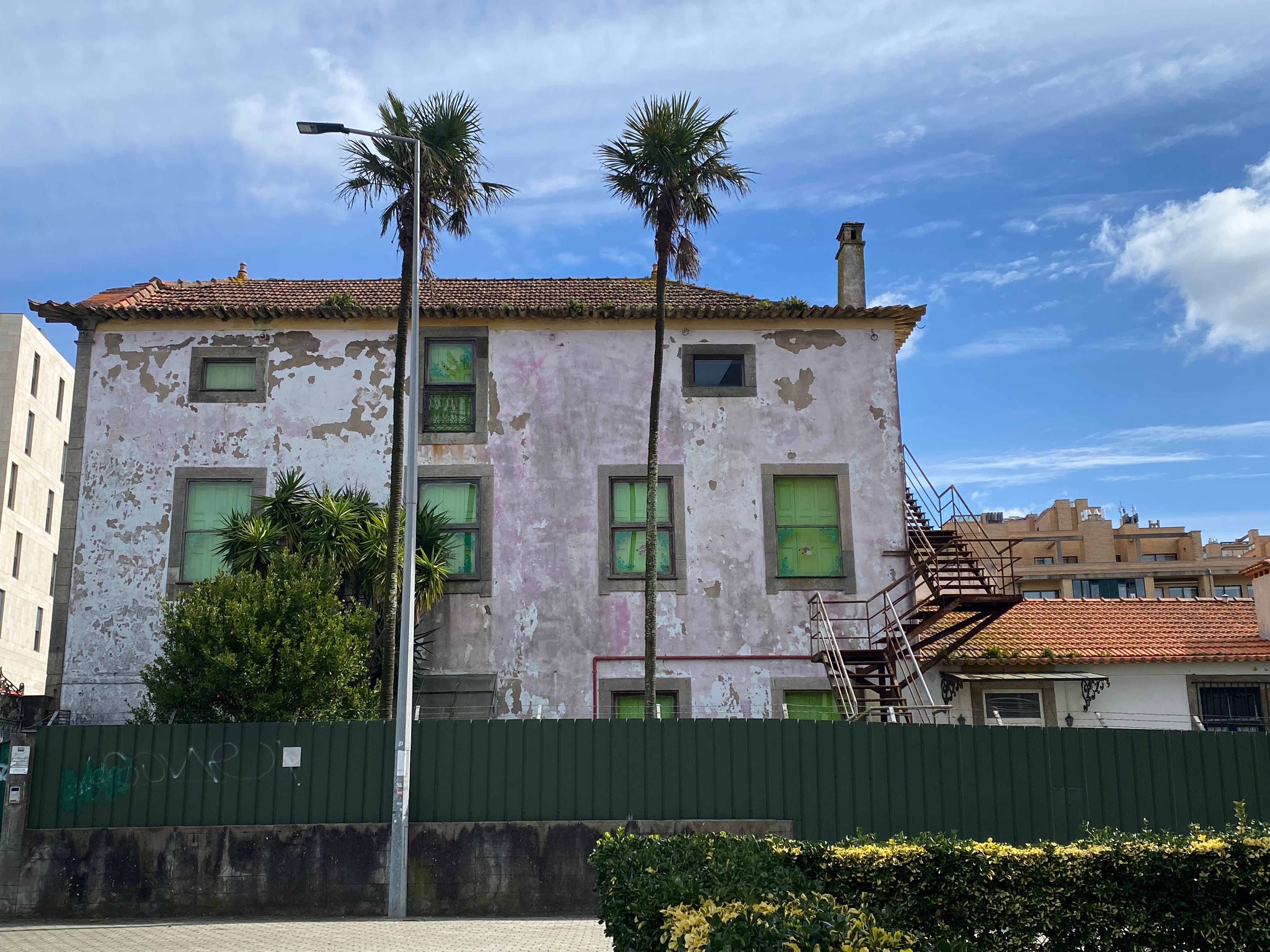
I walk to the correios to post a mother’s day card - while it’s Father’s Day here on Sunday, in England it’ll be Mother’s Day, and my card to my Mum is covered with the sunflowers that, come June or July, will fill the gardens and allotments and wild spaces that I peer into through ornate metal gates or rusty fencing as I weave my way along the narrow street’s bends and curves.
Past a small mercearia1, crates of apples and potatoes stacked proudly either side of the dark doorway, and a tiny taberna I’m not sure I’ve noticed before - is it usually open? Past modern-looking offices whose purpose is unclear, even from their signage. No-one ever seems to be inside them.


A grand old turreted building - once the home of a local boy who made good in Brazil and became the Marquez it’s now named after - stands aloft behind tall, forbidding gateways to grounds which, our neighbours tell us, were not so long ago open to everyone. Perhaps that explains the colony of stray dogs that still live there. Occasionally, we see a car parked up, boot open, its driver lugging out a sack of dog food which they scoop through the bars of the gate to the expectant hounds. Now, the whole place is being developed: luxury villas and apartments for the super-rich whose Porsches and Mercedes are surely no more immune to the pot-holes than our little bone-shaker.
Canidelo, like so many of the places that edge the coast here, was once a small fishing village, and its origins can be traced back to at least the 13th century as a parish of Vila Nova de Gaia. Historical accounts tell that an English crusader passing through the area in 1147 - then known as Portucale - observed that the sands of Cabedelo beach, just minutes from where we live, were considered to have healing properties which the sick would cover themselves in before entering the sea. It’s said that a local bishop even cured leprosy there.
Now, it’s a place we walk regularly, and I’d say that it’s done a fair bit of healing for us, too.
But now jutting beside the praia de Cabedelo, on a headland known simply as the bacalhau - if you know Portugal, you’ll know that bacalhau are those enormous smelly dry cod-fish you’ll see stacked in every supermarket - … now the produce it boasts are luxury apartments, stacked one on top of each other, jostling for views of the sea that many would need some kind of Heath Robinson contraption to actually see. Portuguese friends of ours remember playing up there as kids, before going swimming or fishing.
But I guess this is true of so many coastal places, and the coast is home to the majority of Portugal’s population. Now, though, the demand for luxury homes with sea views, fuelled in part by foreign investors, whether they’re opting to live here or not, feels a little out of control.
And so, increasingly, I find myself enjoying exploring away from the waterfront, discovering the many, varied layers of this place I call home, walking its least appealing streets to let myself wonder about the layers upon layers of life and time that reveal themselves like the rings of a tree trunk.
My curiosity pricked from this latest walk, and fully in intermezzo mode now, my research into Canidelo’s history also revealed the extraordinary story of the locally famed Iñes de Castro.
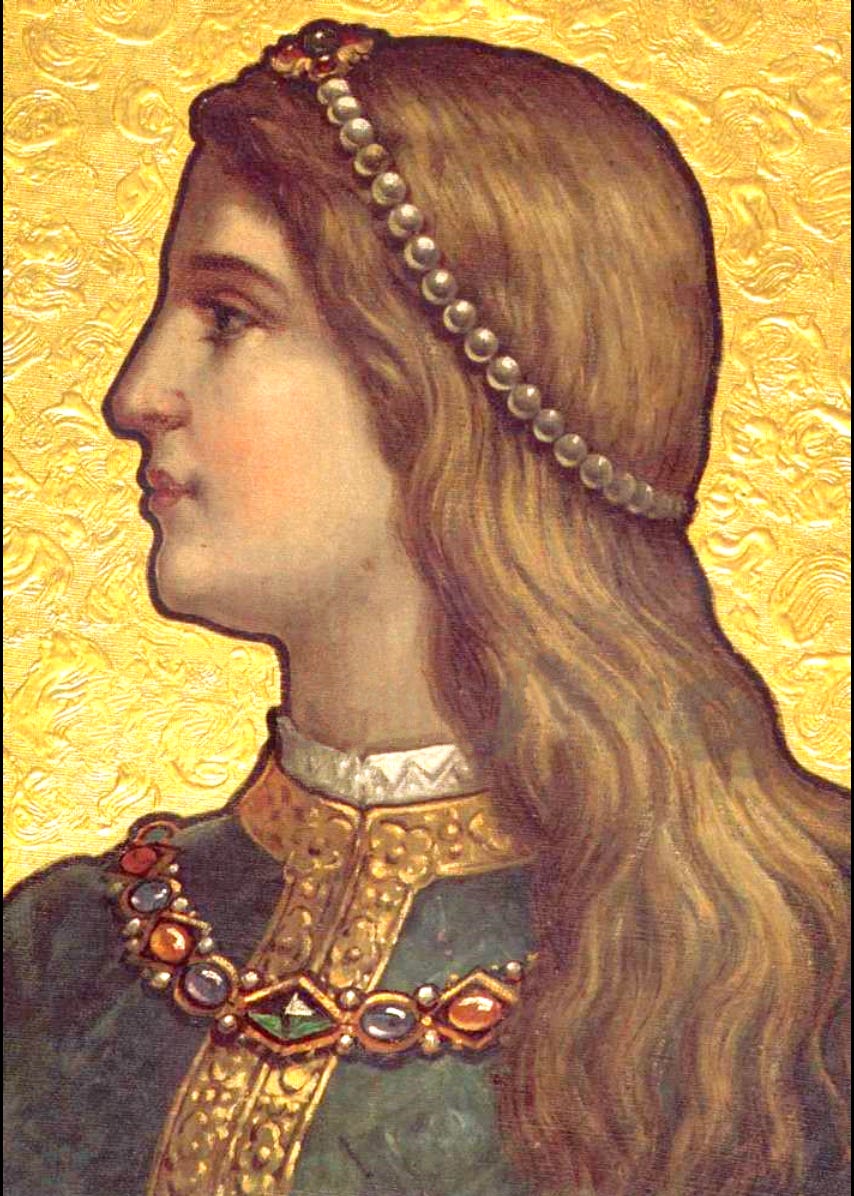
This Galician noblewoman and courtier had been the mistress of Prince Pedro but his scandalised father eventually had her murdered - decapitated no less - after she’d borne his son a few children, and Pedro started getting pally with her brothers, whose interference in public affairs only added further fuel to his father’s fire, and civil war kicked off. When Pedro became King, it was Canidelo that bore the brief glory of being made a municipality (1363-1375) in memory of his beloved Iñes who posthumously became his wife and queen after he dug up her decomposing corpse - she is often referred to now as the ‘skeleton queen’ - which he processed from Coimbra to Alcobaca where they are both now entombed.
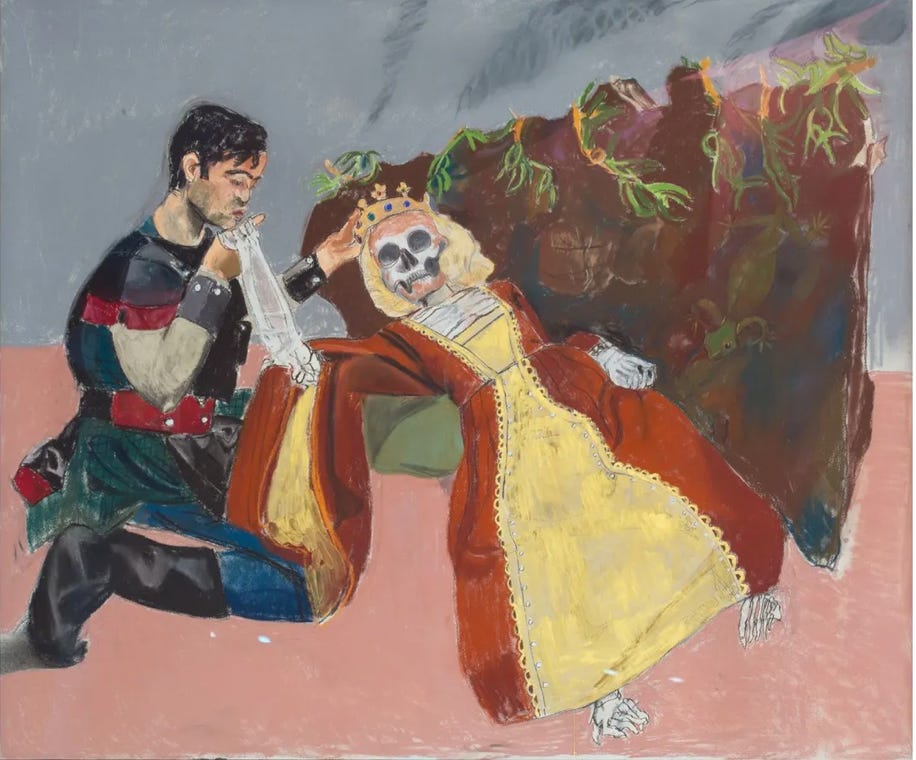
Iñes’ macabre story has been immortalised in Camões’ The Lusíades but has proven rich material for writers like Ezra Pound, too, in The Cantos and Aphra Behn who translated a novel originally in French called Agnes de Castro; or, The Force of Generous Love in 1688 . I have just found myself a whole new literary rabbit-hole to fall into, and I can’t wait!
Are there any great stories related to the square mile (or two) that you inhabit?
What would an intermezzo mean to you?
-I’d love to know - I’m nosey like that!
And if you’d like to find out more about Iñes de Castro in literature and elsewhere, let me know! I’m going to do more digging… the little I’ve read so far is incredibly enticing! A trip to Alcobaca beckons ever more strongly now!
Wishing you well for a lovely week, wherever you are, and whatever you’re doing 😊
Até à próxima,
Michelle 🦋
These are little grocery stores that you still see everywhere, selling pretty much all the essential groceries, and still a lifeline for local communities. In the cities, you’ll find many ‘diversifying’, selling organic and artisanal produce.
An intermezzo for me usually involves disappearing from the farmhouse for a while and hiding away in one of Listowel's lovely coffee shops with my book. I love the pictures of your locale, and the interesting history.
Fascinating exploration by Michelle! I'm familiar with Portugal's Skeleton Queen, but not the Marquez.
There are so many local stories around Marco de Canaveses, I don't even know where to begin. Locals used to say that the Ruínas do Fidalgo were never just an abandoned manor. According to old stories, several workers died while the house was being built, falling from the granite walls or crushed by stone, and people began to whisper that the Devil had claimed the place. After the house was finished, strange things were said to happen there. Lights seen at night, animals refusing to go near, and unexplained noises echoing through the empty rooms. In the end the noble family left, the roof collapsed, and the house slowly turned into the ruins we see today. Older people in the area would still warn children not to play there, saying simply, “Aquilo é a casa do diabo.”